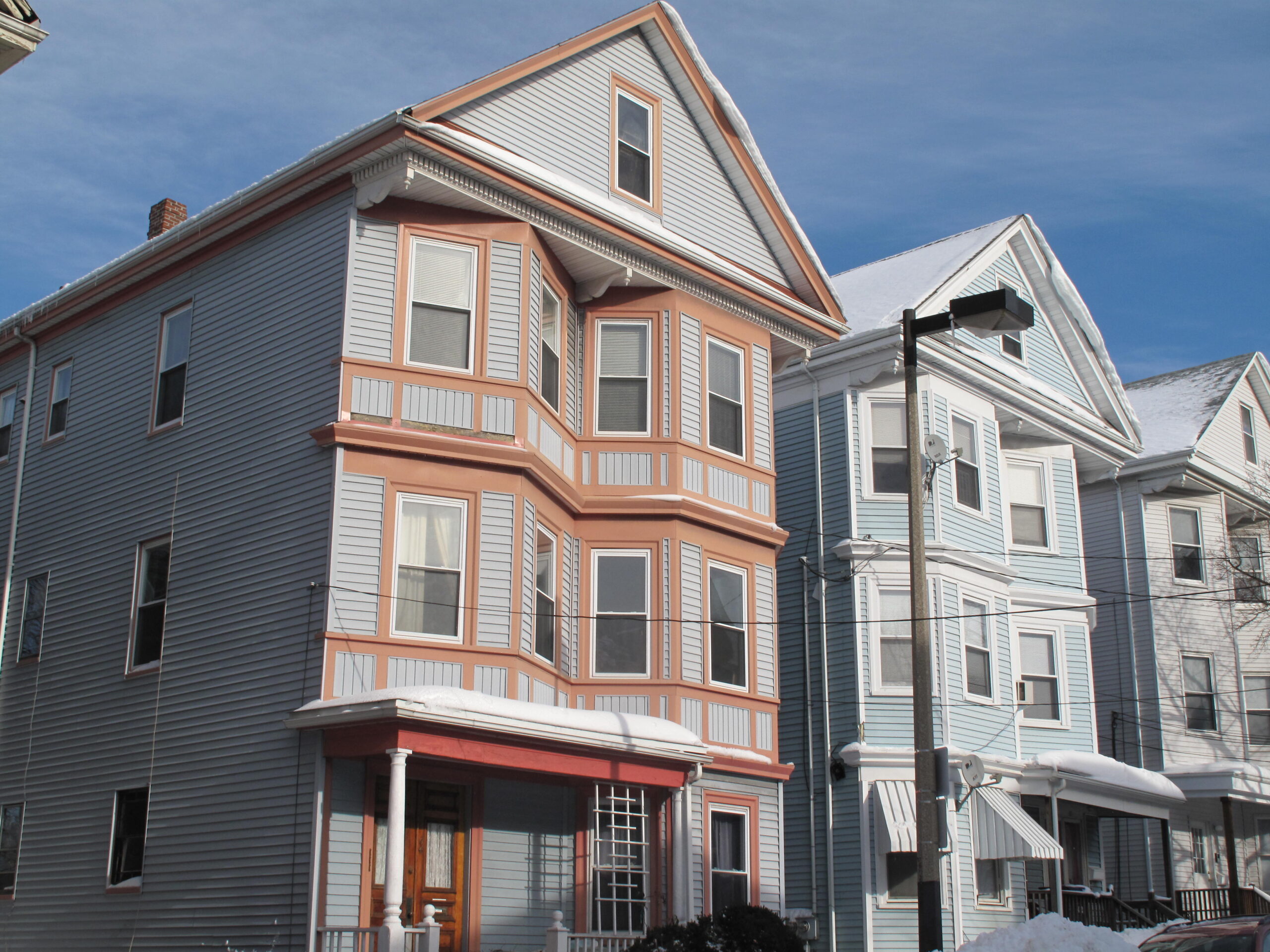
Three-Deckers are introduced in Boston.
1880
(ca.) Also called Triple-Deckers, the wood-frame, free-standing houses are constructed several at a time by local builders on small lots. Although sometimes derided as “Boston’s Weed,” they provide more daylight and air circulation than attached tenements and rowhouses and promote homeownership opportunities for the working class in Boston and other New England cities. By 1930, some 15,000 are built in Boston, with the largest concentration in Dorchester, and they make up some 40% of the city’s housing stock. Construction of three-deckers is banned in many municipalities in the state in 1912* and in Boston in 1927.* Some 9,000 remain in Boston today and zoning codes have been made more flexible to again allow their construction.
Sources
- Johnson, Marilyn S.
- Krim, Robert
- Boston Globe
- O'Connell, James C.
- Warner, Sam Bass Jr.